Overview of the Karen Read Case
The Karen Read trial became one of the most watched criminal cases in the country because it had almost everything that drew public attention: the death of a police officer, a defendant with a large public following, disputed forensic evidence, accusations about the investigation, and two trials that ended very differently in the public mind.
At the center of the case was the death of Boston police officer John O’Keefe, who was found outside a Canton, Massachusetts home in January 2022 during winter weather. Prosecutors alleged Karen Read struck him with her SUV after a night of drinking and left the scene. Read denied killing him, and her defense argued she was framed. Her first trial ended in a mistrial in 2024. Her retrial ended on June 18, 2025, with acquittals on second-degree murder, manslaughter, and leaving the scene after an accident resulting in death. The jury convicted her of operating under the influence.
That is the short version. The legal version is more useful. This is the Karen Read case explained through the issues that matter in serious criminal defense cases: timeline evidence, forensic disputes, credibility, reasonable doubt, and why a jury can reject the state’s theory on the most serious charges while still convicting on something else.
Karen Read Trial Timeline
January 2022: The Night John O’Keefe Died
Read and O’Keefe had been out with others before O’Keefe was later found outside a Canton home. Prosecutors alleged Read hit him with her SUV. The defense disputed that theory and argued the investigation pointed in the wrong direction.
That early timeline became one of the most important parts of the case. In criminal trials, the question is rarely just “what happened?” It is “what can the state actually prove happened?”
2022: Charges Filed Against Karen Read
Read faced serious charges, including second-degree murder, manslaughter while operating under the influence, and leaving the scene of personal injury and death. Those charges carried very different legal requirements, which matters later when looking at the mixed verdict.
2024: First Trial Ends in a Mistrial
The first trial ended after jurors could not reach a unanimous verdict. A mistrial does not mean a defendant was found innocent or guilty. It means the jury could not agree, and the state may have another opportunity to try the case.
2025: Karen Read Retrial and Verdict
The retrial began in April 2025, with jury selection starting April 1 and continuing through April 15. Jurors began deliberating on June 13, 2025, and reached the Karen Read verdict on June 18, 2025. Read was acquitted of second-degree murder, manslaughter, and leaving the scene after an accident resulting in death. She was found guilty of operating under the influence and sentenced to one year of probation.
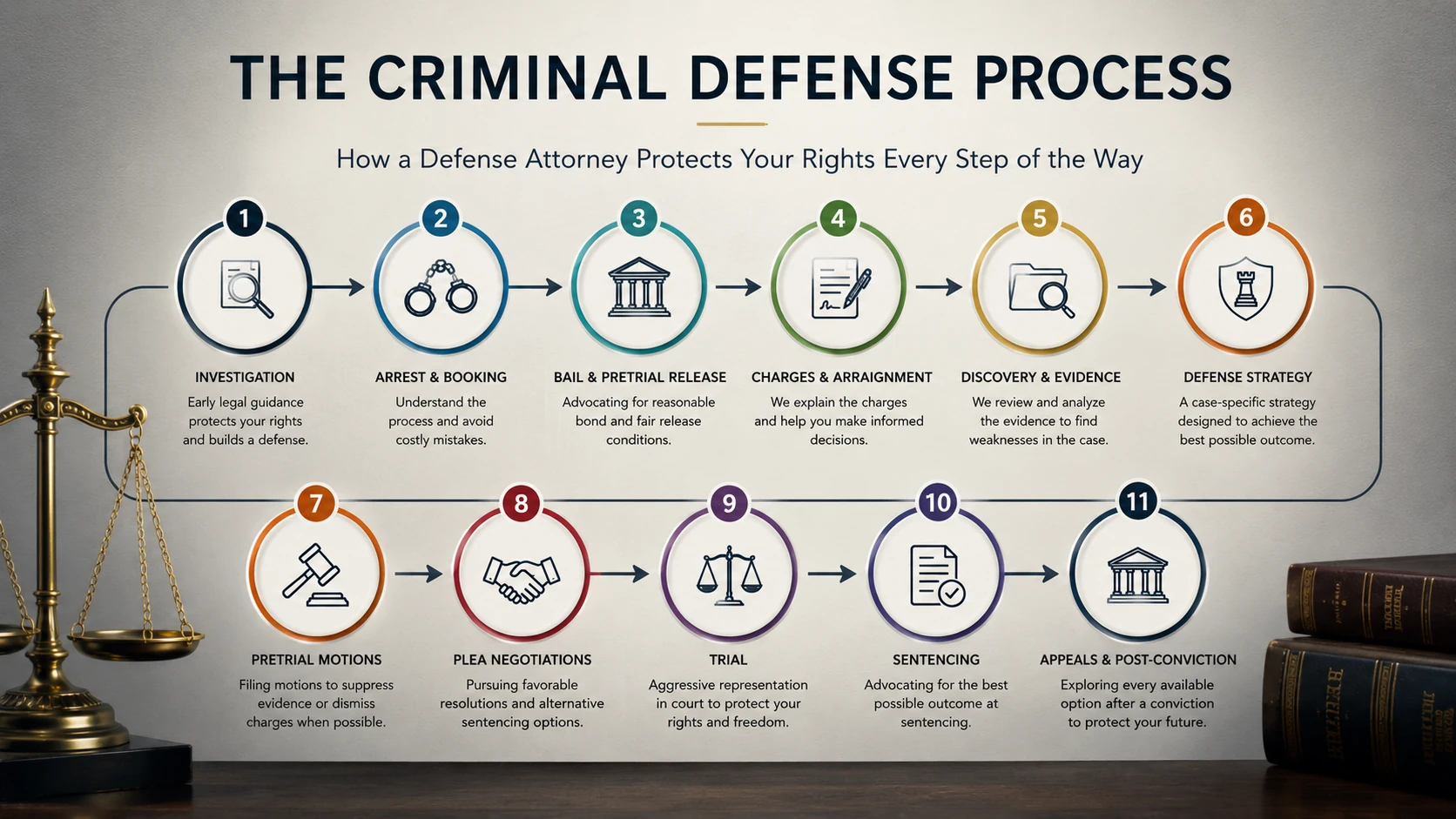
That Karen Read trial timeline matters because it shows how long a serious criminal case can stay alive, even after one jury cannot agree. Defendants can learn more about the stages that may occur from investigation through trial by reviewing the criminal defense process.
What Prosecutors Alleged in the Karen Read Trial
Prosecutors alleged that Read struck O’Keefe with her vehicle after a night of drinking and left him outside. Their theory depended on evidence they argued connected her SUV, her condition, and the timeline surrounding O’Keefe’s death.
That is the prosecution’s job: build a story that connects the evidence to each element of the charges. But a story is not enough. In a criminal case, every major allegation has to survive scrutiny.
What the Defense Argued
The defense disputed the vehicle-impact theory and argued Read had been framed. Her lawyers raised questions about the investigation, witness accounts, evidence handling, and whether the state’s version of events matched the physical and forensic evidence.
This is where the case became bigger than a standard trial recap. The defense was not just arguing that the state got one fact wrong. It attacked the structure of the case itself.
Key Legal Issues in the Karen Read Trial
Reasonable Doubt
The phrase reasonable doubt can sound academic until a case like this shows what it means in real life.
Reasonable doubt does not require the defense to prove an alternate story beyond all doubt. The burden stays with the state. If jurors are not firmly convinced that the prosecution proved a charge, the verdict on that charge should be not guilty.
That becomes especially important in a case with competing theories. The jury did not have to believe every defense claim to reject the state’s most serious charges. It only had to find that the prosecution had not carried its burden.
Forensic Evidence and Expert Testimony
The Karen Read evidence included issues common in serious criminal cases: accident reconstruction, medical evidence, vehicle evidence, phone data, timelines, and expert testimony.
This kind of evidence can feel scientific and settled, but it is not always that simple. Experts can disagree. Data can be interpreted differently. Physical evidence may raise more questions than it answers. A defense lawyer has to slow the case down and ask whether the evidence proves what the state says it proves or whether it simply supports a theory the state wants the jury to accept.
This careful review of evidence is one part of how a lawyer can provide protection throughout the criminal defense process.
Police Investigation and Credibility
The investigation itself became a major issue. Defense attorneys often examine law enforcement conduct closely, especially in cases involving police witnesses, possible conflicts, documentation problems, missing context, or credibility concerns.
That is not a technicality. The quality of the investigation affects the quality of the case. If officers fail to document something properly, overlook evidence, mishandle information, or appear biased, the jury may have a harder time trusting the conclusions built from that work.
After the verdict, Massachusetts State Police acknowledged that the case prompted the department “to thoroughly review our actions and take concrete steps to deliver advanced investigative training, ensure appropriate oversight, and enhance accountability,” according to NBC Boston. For defense attorneys, it is a reminder that the quality of an investigation can become just as important as the evidence it produces.
Jury Deliberations and Mixed Verdicts
The Read verdict is also a useful reminder that juries do not have to accept or reject a case all at once.
They can acquit on some charges and convict on others. Here, the jury rejected the most serious charges but convicted Read of operating under the influence. A Northeastern law professor described the result as an example of a jury landing on a lesser charge while rejecting the homicide allegations.
That kind of verdict can frustrate people watching from the outside. But inside a courtroom, each charge stands on its own. Each element has to be proven separately.
Why the Karen Read Case Received National Attention
The case drew national attention because it had the ingredients of a true-crime storm: livestream coverage, social media debate, public supporters, law enforcement witnesses, a deceased police officer, and a defense theory that directly challenged the integrity of the investigation.
High-profile cases also create a second courtroom: the public one. People form opinions from clips, commentary, headlines, and trial moments taken out of order. That attention does not change the legal burden, but it can shape how the case is discussed long after the verdict.
Similar questions about timelines, evidence and criminal charges are explored in The Truth and Tragedy of Moriah Wilson, another high-profile case analysis from The O’Donnell Law Firm.
Criminal Defense Lessons From the Karen Read Trial
The Importance of Challenging the State’s Theory
A criminal defense lawyer does not have to accept the prosecution’s frame. The state may present a clean version of events, but clean does not mean complete.
The defense has to test every piece: the timeline, the witnesses, the physical evidence, the expert opinions, and the assumptions holding it all together.
Why Evidence Handling Matters
Chain of custody, documentation, collection procedures, and preservation all matter because evidence is only as useful as the process behind it.
If evidence is handled poorly, documented vaguely, or interpreted without enough context, the defense can use those problems to challenge reliability. Sometimes the question is not whether evidence exists. It is whether the jury can trust how it was collected and explained.
The Role of Cross-Examination
Cross-examination is where polished testimony gets tested. A good cross-examination can expose bias, uncertainty, inconsistency, poor memory, weak documentation, or assumptions dressed up as fact.
In a case with heavy public attention, cross-examination gives jurors permission to slow down. They do not have to accept the most repeated version of the story. They have to examine the proof.
Why Every Criminal Charge Must Be Proven Separately
The Read verdict makes this point clearly. A jury can find reasonable doubt on murder, manslaughter, and leaving the scene while still finding enough proof for operating under the influence.
That is not a contradiction. It is how criminal charges work. Different charges require different proof.
What Happened After the Karen Read Verdict
The legal fallout did not end with the verdict. Public debate continued. Civil litigation continued as well, including the wrongful death civil case filed by John O’Keefe’s family. CBS Boston reported continuing civil-case developments into 2026, including hearings and warnings to attorneys about leaks and conduct in the litigation.
Read also filed a lawsuit in 2026 against Massachusetts State Police and Canton police, alleging misconduct tied to the investigation. NBC Boston reported that lawsuit and the claims made by Read’s legal team.
None of that changes the criminal verdict, but it shows how one criminal case can continue generating legal consequences long after the jury leaves.
What Defendants Can Learn From High-Profile Criminal Trials
Most criminal cases will never become national news. They will not have livestreams, online theories, or crowds outside the courthouse.
But the same principles still apply.
Get a lawyer early. Do not try to explain your way out of an investigation alone. Preserve evidence. Be careful with public statements. Understand that texts, phone data, location records, video, and witness accounts can all become part of the state’s theory.
A criminal case is not just about what happened. It is about what can be proven, how it was investigated, and whether the state can meet its burden on each charge. The firm’s criminal defense resources provide additional information about legal strategy, evidence and protecting your rights.
Facing Criminal Charges? Speak With a Defense Attorney
If you are facing criminal charges or believe you are under investigation, early legal guidance matters. The O’Donnell Law Firm helps clients understand the evidence, protect their rights, and build a defense strategy around the facts of the case.
A serious accusation needs more than guesswork. It needs careful review, clear communication, and a defense built before the state’s version of events hardens into the only story being told.
Contact The O’Donnell Law Firm to discuss your situation with a Houston criminal defense attorney.